Fire doors in rented properties: A guide
Posted September 15th 2026

A properly specified and maintained fire door can slow the movement of fire and smoke through a building. By protecting escape routes and separating different areas, it can give residents valuable additional time to reach safety.
Its performance, however, depends on much more than the door itself. The frame, hinges, seals, glazing and closing mechanism must all work together as a complete system.
Requirements vary between properties, so landlords need to understand where fire doors are necessary, recognise visible signs of deterioration and arrange suitable repairs without delay.
What is the purpose of a fire door?
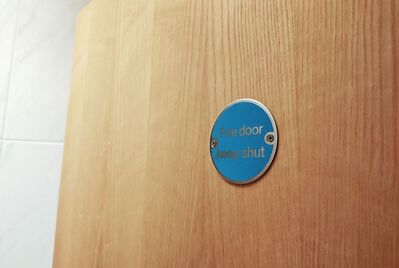
A fire door is designed to resist fire and, where applicable, smoke for a specified period while it remains closed.
The door leaf is only one part of the protection. The frame, hardware, seals, glazing, letterbox and self-closing device can all influence how the doorset performs during a fire.
Damage, unsuitable alterations or poor installation may compromise that performance. A door that is wedged open or fails to close fully will also be unable to provide its intended protection. Government guidance identifies fire doors as an essential part of the measures used to protect escape routes in blocks of flats.
Does every rented home require fire doors?
There is no universal requirement for every internal door in every rented property to be a fire door.
The correct provision will depend on matters including the property’s age, design, height, occupancy and route of escape. A fire door might be required under Building Regulations, as part of a protected escape route, through an HMO or property-licensing condition, or following a fire-risk or housing-safety assessment.
A conventional house occupied by one family may therefore have different requirements from a licensed HMO, a converted building or a flat within a purpose-built block.
Where the position is uncertain, landlords should consult the local authority, the building’s Responsible Person or a competent fire-safety professional. Assumptions based solely on the appearance or age of a door may not provide an adequate assessment.
What rules apply in blocks of flats?
The Fire Safety (England) Regulations 2022 apply to buildings in England containing two or more domestic premises where residents use shared areas as part of their escape route.
The Responsible Person must provide residents with information advising them to:
- keep fire doors closed when they are not being used;
- avoid interfering with self-closing equipment; and
- report faults or damage as soon as they are noticed.
Additional inspection duties apply where the building’s top storey is more than 11 metres above ground level. The Responsible Person must use best endeavours to check flat entrance doors at least every 12 months, while fire doors in communal areas must be inspected at least once every three months.
An individual leasehold landlord will not necessarily be the Responsible Person for the building. Even so, landlords should establish who holds that responsibility, respond to requests for access and ensure their tenants understand the fire-door instructions provided.
What should landlords check?
A simple visual assessment can reveal many common defects. The Government’s fire-door checking guidance recommends checking for:
- visible damage to the door, frame, glazing or letterbox;
- loose, damaged or missing hinges and screws;
- seals that are damaged, missing or covered with paint;
- gaps that appear unusually wide or inconsistent; and
- a self-closing device that does not bring the door firmly into its frame.
A fire door should never be wedged or propped open unless it is fitted with an appropriate approved device linked to the fire-alarm system. Tenants should be reminded not to disconnect a self-closer or alter the door and to report any problem promptly.
Visual checks are useful, but they are not a replacement for a professional inspection or a suitable fire-risk assessment.
It is also important not to assume that an older door is defective simply because it does not display modern certification markings. Its construction, condition, installation and suitability for the building should all be considered by someone with the appropriate competence.
What should you do when a fault is found?
Any damage or failure affecting a fire door should be addressed promptly.
Avoid unqualified alterations. Replacing locks, fitting a new letterbox, changing glazing or adjusting the frame can affect the performance of the complete doorset, even where the alteration appears minor.
Repairs and replacements should be undertaken by a person with suitable knowledge, training and experience. Where there is uncertainty over whether a door remains suitable, a specialist fire-door inspection can provide a clearer assessment.
Government fire-safety guidance for sleeping accommodation makes clear that fire precautions must be maintained in effective working order.
Landlords should retain records of inspections, reported defects and completed repairs. These records can demonstrate that concerns were taken seriously and dealt with in a timely way.
Making fire-door safety part of property management
Fire-door checks should form part of a property’s wider safety and maintenance programme rather than being treated as a one-off exercise.
Make sure tenants understand why the doors are important and how to report a fault. Where responsibilities are shared with a freeholder, block manager or managing agent, establish who will arrange inspections and how landlords will be informed about any work affecting their property.
Fire doors provide protection only when they are suitable for their location, correctly installed, kept closed and maintained. A considered approach to inspections and repairs can help landlords protect their tenants while meeting the requirements that apply to their property.
This article provides general information for landlords in England and is not legal or fire-safety advice. Different legislation and requirements apply in Scotland, Wales and Northern Ireland.